A woman on the public stage
Sarojini Naidu did not lead India’s women’s movement. She worked inside it — one figure in a wide, argumentative network of organisers, doctors, teachers and reformers, several of whom were doing the harder institutional work while she did the speaking.
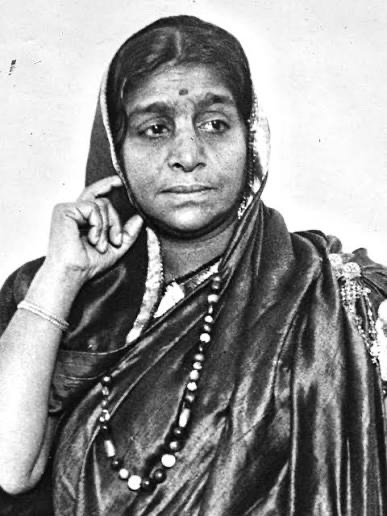
15 December 1917
The deputation on the franchise
A delegation of Indian women asked the Secretary of State for India and the Viceroy to write the coming constitutional reforms without regard to sex. Sarojini Naidu led it.
Edwin Montagu had arrived in India as Secretary of State to prepare what became the Montagu–Chelmsford reforms. In December 1917, at Madras, a deputation of women from across India put their case to him and to Lord Chelmsford, the Viceroy.
The demand was straightforward: that the franchise be extended without a bar on sex, and that women be eligible to sit in the councils the reforms would create.
They did not get it. The Government of India Act of 1919 declined to enfranchise women directly and instead left the question to the new provincial legislatures. Province by province, over the following years, those legislatures acted — Madras first, in 1921, then Bombay, then others. The franchise granted was in any case narrow, tied to property and education, and applied to a small fraction of women.
Universal adult suffrage arrived only with the Constitution of independent India, which came into force in 1950 — a year after her death.

The photograph is a record of an ordinary condition of her working life: the only woman in the frame.
The network
She was not there alone
Accounts of the 1917 deputation name a delegation of around fourteen women. Some are well documented; others survive only as a name on a list. Both facts are worth showing.
- Annie BesantTheosophist and Home Rule campaigner; President of the Indian National Congress, Calcutta, 1917 — the first woman to hold the office.
- Margaret CousinsIrish suffragist and educationist, resident in India; a founder of the Women’s Indian Association in 1917.
- Dorothy JinarajadasaA founder of the Women’s Indian Association and an organiser of the franchise campaign.
- Herabai TataParsi suffragist from Bombay who, with her daughter Mithan, later took the Indian franchise case to Britain.
- Muthulakshmi ReddyPhysician and social reformer; later the first woman legislator in India, elected to the Madras Legislative Council in 1927.
- Kamalabai KibeNamed in accounts of the deputation.
- Nalinibai DalviNamed in accounts of the deputation.
- Parvati AmmalNamed in accounts of the deputation.
- SrirangammaNamed in accounts of the deputation.
- Sarojini NaiduLed the deputation. The best-known name on the list — which is itself part of what this page is about.
Why this list is here Popular accounts frequently describe Sarojini Naidu as the leader of the Indian women’s movement. She was not. She was its most audible voice at a particular moment. The organisations, the medical and educational work, and the legislative campaigning were carried by many people, and several of them are far less remembered than they should be.
Historical context
Women entering public life in colonial India
Education first
The nineteenth-century reform movements had made girls’ education a respectable public cause before they made women’s political rights one. By the 1900s a small number of Indian women had university degrees, professional training and, crucially, the social permission to appear on a platform. Almost every woman named on this page came through that opening.
Organisations
The Women’s Indian Association was founded in Madras in 1917. The All India Women’s Conference followed in 1927, initially concerned with education and soon with law reform, marriage age and the franchise. These bodies gave women’s demands an institutional form that a deputation alone could not.
Nationalism and gender
Indian nationalism gave women an argument for entering public life — the nation needed everyone — and simultaneously a reason to postpone their own demands, since the nation came first. This tension runs through the entire period, and through Sarojini Naidu’s own speeches. She generally argued that the two causes were the same cause. Not every woman in the movement agreed.
Mass movements changed the arithmetic
Gandhi’s campaigns needed very large numbers of people willing to court arrest, and women joined them in numbers that constitutional politics had never involved. Picketing, the boycott of foreign cloth and the salt campaigns brought women into public protest at scale. Participation of that kind is harder to withdraw than a concession.
Representation, then and after
Muthulakshmi Reddy entered the Madras Legislative Council in 1927. Women sat in the Constituent Assembly that framed India’s Constitution. Sarojini Naidu herself was elected to that Assembly, representing Bihar, in 1946. The line from the 1917 deputation to the adult franchise of 1950 is real, but it is a line of thirty-three years.
What she added
Her specific contribution was audibility. She could fill a hall, hold a hostile audience, and put the case for women’s political presence in language that a mass meeting would carry home. In a movement built on persuasion, that was a distinct and necessary skill — and it is not the same thing as having built the movement.
The platform
Public speech as political work
She addressed Congress sessions, women’s conferences, student unions and street meetings across India, and audiences in Britain, South Africa and the United States. She spoke to Indian communities abroad about their standing under discriminatory law, and to Western audiences about self-rule.
What survives of that work is thinner than it should be. Speeches were reported in newspapers, printed in party publications, and remembered by people who heard them; recordings are scarce. The result is that her most consequential political instrument is the part of her career hardest to quote accurately — and the easiest to fill with invented quotations, which is exactly what has happened.